Create verified, tamper-proof data for the AI economy.
One API stamps any file to the blockchain — a verified record that any agent or human can check, and no one can alter.
Identity, integrity, and provenance — proven on every file
Prove who created it
Every stamp is linked to a verified issuer on-chain. Any agent can confirm the creator programmatically — no human in the loop.
Prove it hasn’t changed
A cryptographic hash is recorded at the moment of stamping. Change one byte and the hash won’t match — exposing tampering instantly.
Prove when it existed
The blockchain timestamp is an irrefutable record of when a file existed in a specific form, at a specific time.
An API designed for machines
The Product API wraps our blockchain layer in a single webhook — it pins your file to IPFS and stamps its hash on-chain in one call. Built for agents, LLMs, and developers who move fast.
Upload & stamp
Send a file and stamp it on-chain in one call. We handle IPFS pinning, hashing, and indexing.
List & verify
List groups, check status, or verify any hash against the blockchain — for agents that check before they act.
Batch stamp
Upload files over time, then commit them all to the chain in a single request — built for high-volume issuance.
Real tools, built on one API
Apps running in production today — an agent-installable CLI, a decentralized skills marketplace, and a provenance tracker — all on the same stamping API.
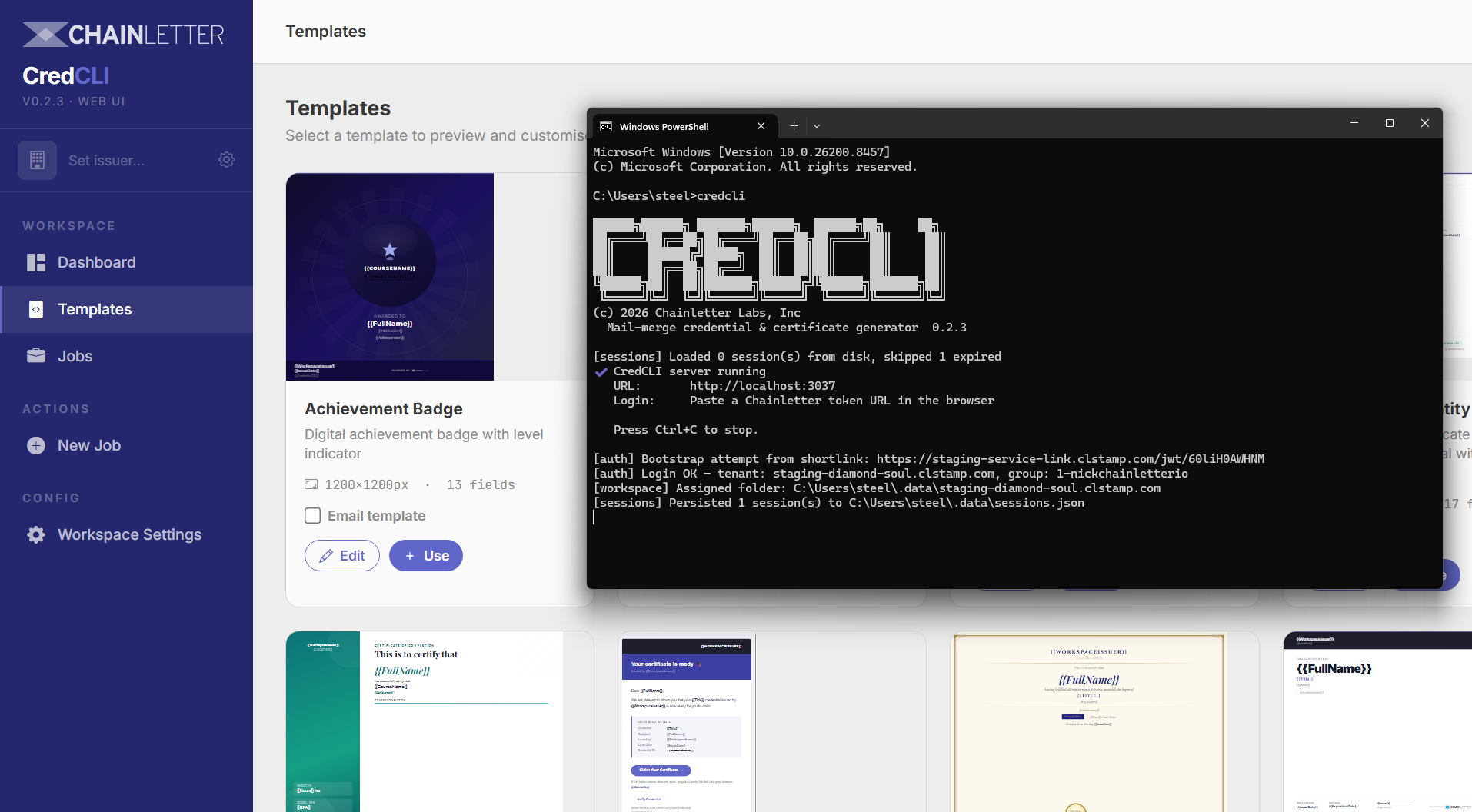
CredCLI
A CLI your agent installs to design and issue credentials to recipients. Point it at a CSV and a template — it renders, stamps, and emails verified credentials, end to end.
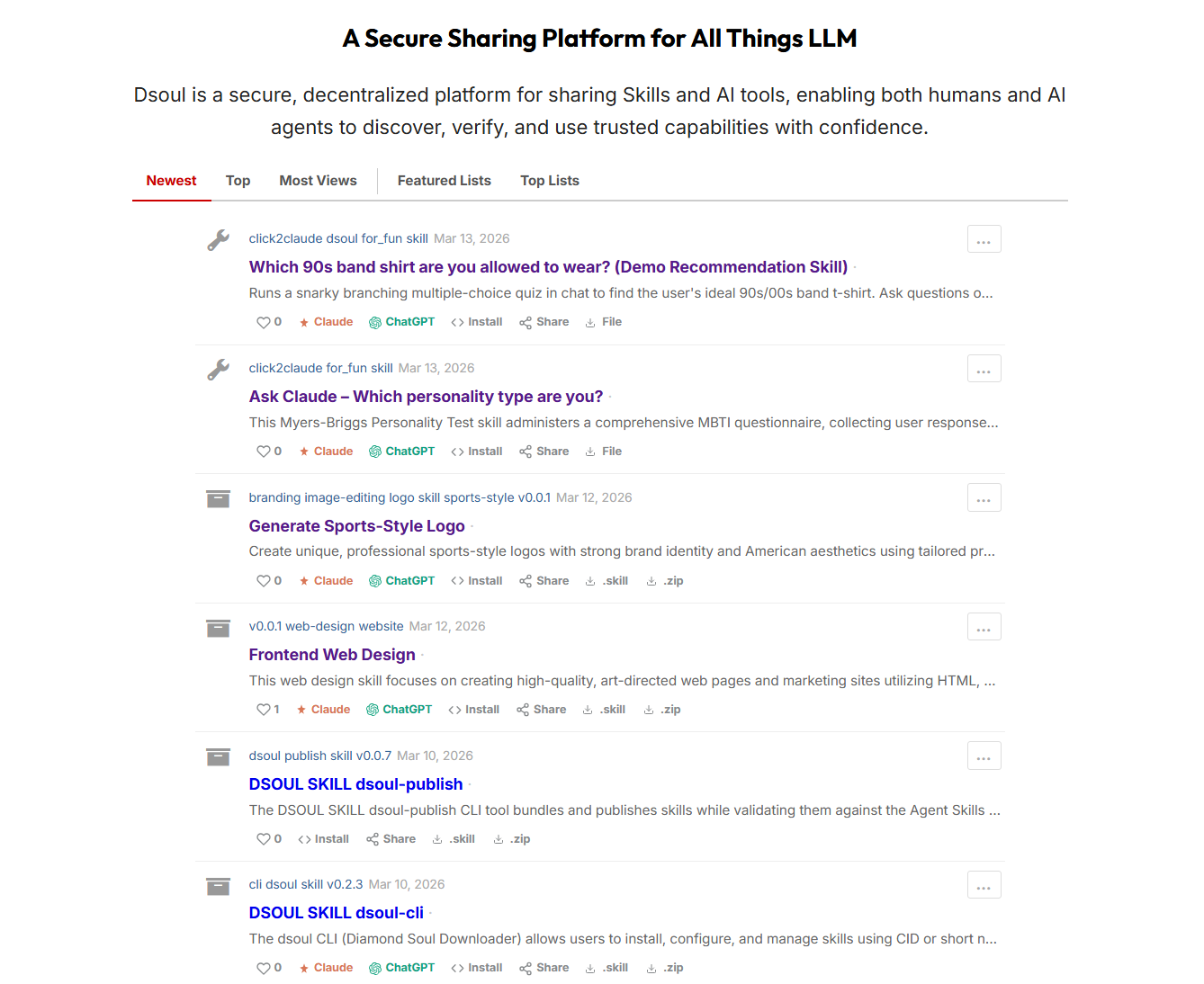
DSoul
A decentralized marketplace for AI skills. Chainletter verifies creator identity and freezes published skills on IPFS — a tamper-proof supply chain for agent capabilities.
Asset Tracker
Timestamped, verified files that follow the custody chain of luxury goods and collectibles. Every ownership transfer is stamped, building an auditable provenance trail.

The one verification layer that can’t be gamed
Databases get hacked. Servers get compromised. The chain can’t be altered — which is why builders trust it as infrastructure.
Can’t be altered
Once stamped, a record can’t be changed, backdated, or deleted — by anyone, including us.
No single point of failure
Your app verifies against the public blockchain, not our servers. No one entity controls it.
Outlasts every company
A file stamped today is verifiable a decade from now by any system that checks the hash.
We built the tool agents actually use
CredCLI is a CLI your agent installs to design and issue credentials to recipients. Point it at a CSV and a template and it renders, stamps, and emails verified credentials — end to end. It ships an Agent Guide and skill files for coding agents.
One chain. Three ways to build on it.
Every layer sits on the same blockchain. Pick how much you want to manage — from a no-code portal, to the agent-friendly webhook, down to the raw on-chain engine.
Product API=Platform API+IPFS pinningOur hand-built app: upload, stamp, and distribute verified files from a private-label portal. Nothing to integrate.
chainletter.clstamp.comOne webhook pins your file to IPFS and stamps its hash on-chain. The easy, agent-native layer — file hosting included.
Stamp and verify hashes directly on-chain. Bring your own storage — this is the engine everything above is built on.
What will you build on Chainletter?
Real tools already run on this API in production. The verification layer is ready — your idea is next.