by Sol Nasisi
Share
by Sol Nasisi
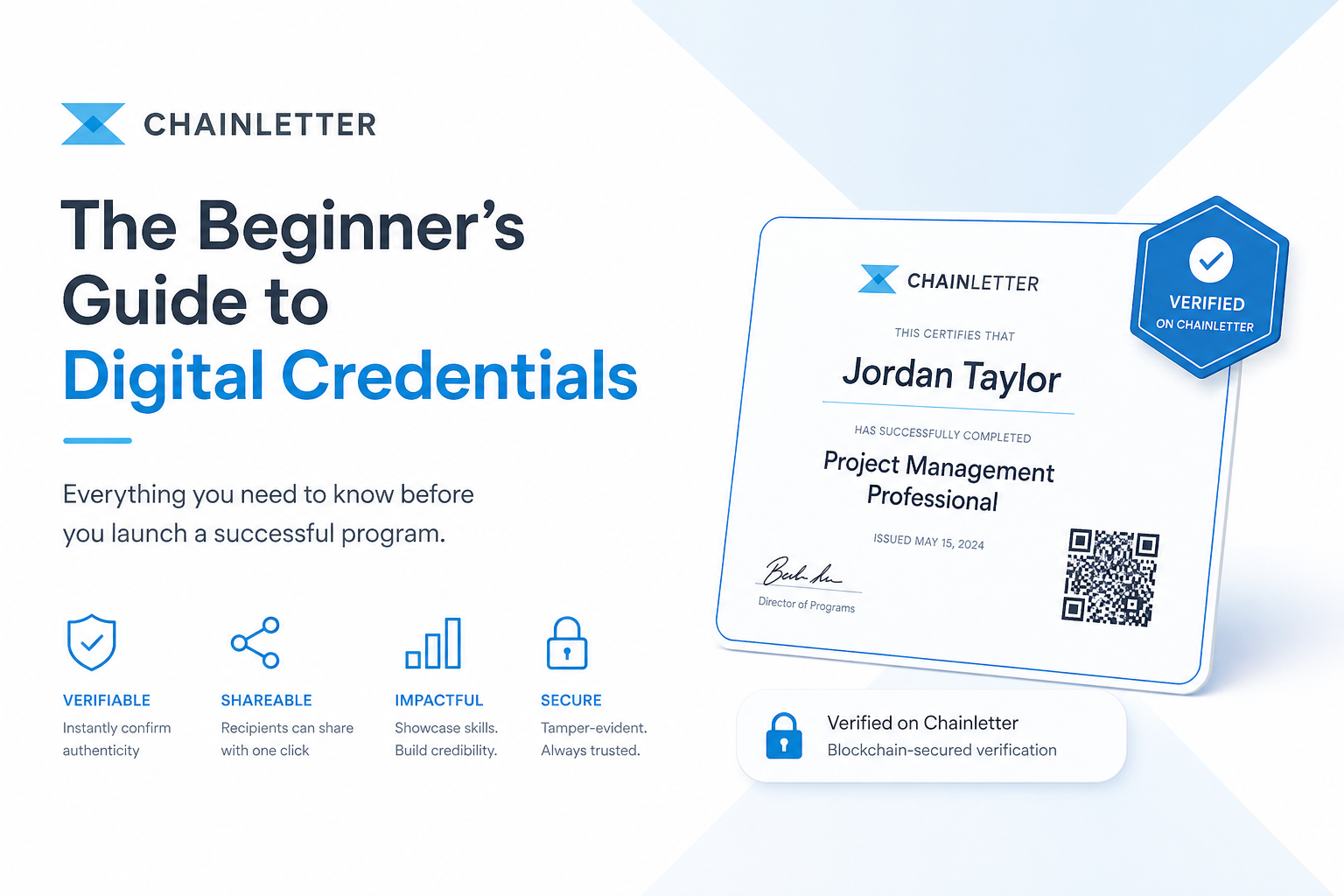
Whether you’re an HR manager trying to modernize your employee training program, a learning and development professional building a certification track, or a department head tasked with issuing credentials for a workshop series — you’ve probably heard the term digital credentials and wondered where to start.
You’re not alone. Organizations of all sizes are moving away from paper certificates and PDF attachments toward verifiable, shareable digital credentials. And while the concept is straightforward, figuring out how to actually build a program can feel overwhelming.
This guide will walk you through everything you need to know — from the basics of what digital credentials are, to how verification works, to what to look for when choosing a platform.
What Are Digital Credentials?
A digital credential is an electronic record that certifies a person has earned a qualification, completed a course, passed an exam, or demonstrated a skill. They come in several forms:
Digital badges are icon-based credentials that can be displayed on LinkedIn profiles, email signatures, websites, and resumes. Each badge contains embedded metadata — the issuer, the criteria for earning it, and when it was awarded.
Digital certificates are the electronic equivalent of a traditional paper certificate. They typically include the recipient’s name, the credential name, the issuing organization, and a date. When issued properly, they also include a verification mechanism so anyone who receives a copy can confirm it’s authentic.
Micro-credentials are smaller, more targeted certifications that recognize specific skills or competencies rather than broad degree programs. They’ve grown dramatically in popularity as employers increasingly look for evidence of specific skills over general qualifications.
Why Are Organizations Moving to Digital Credentials?
The shift isn’t just about going paperless. Digital credentials solve real problems that paper-based systems can’t.
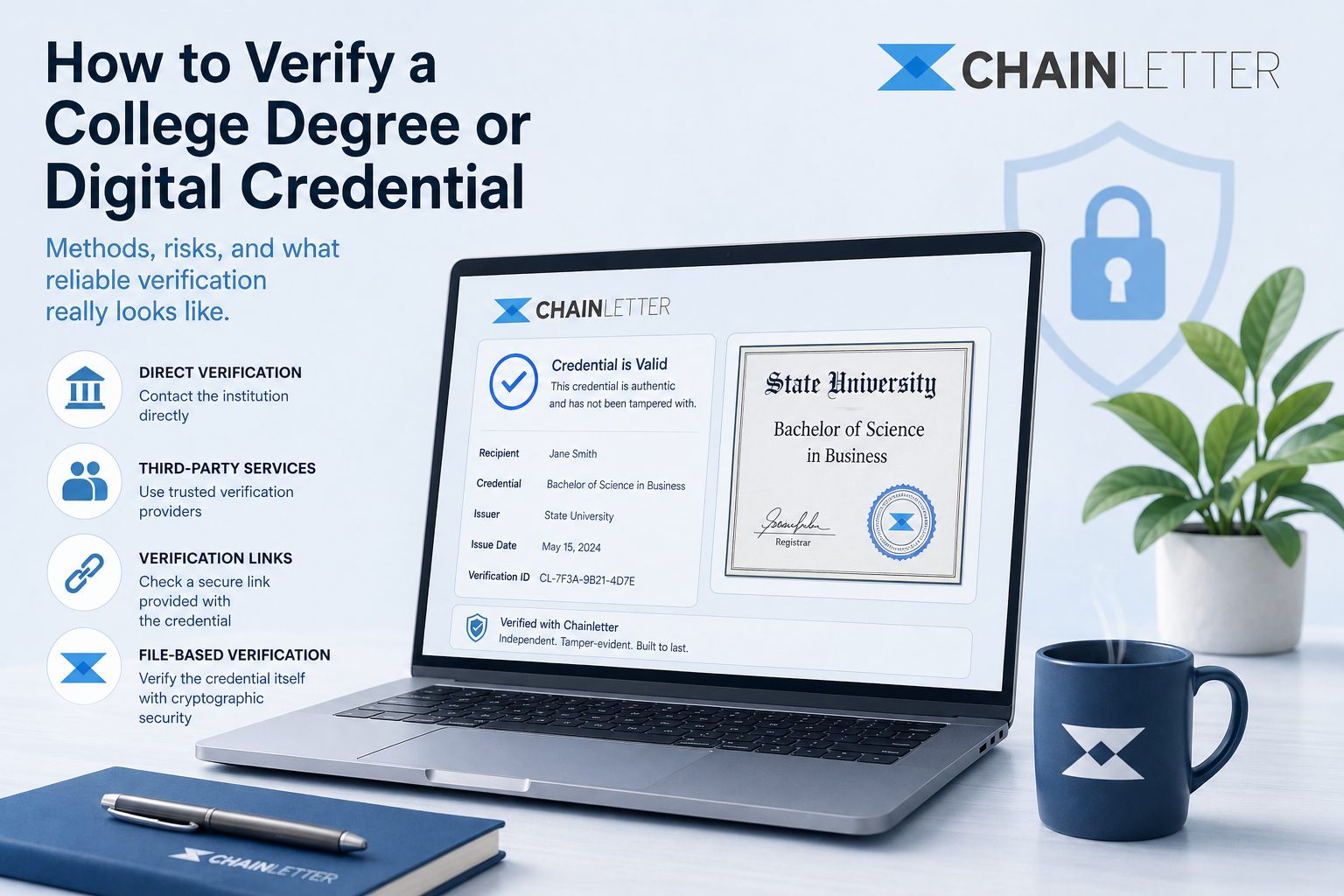
Verification is instant. When a candidate submits a paper certificate, the hiring manager has no easy way to confirm it’s real. With a properly issued digital credential, verification is a link click or QR scan away. Anyone can confirm authenticity in seconds.
Recipients actually use them. A framed certificate hangs on a wall. A digital badge gets posted on LinkedIn, shared in email signatures, and added to resumes. That visibility benefits recipients and serves as organic marketing for your organization’s programs.
Records don’t get lost. Paper certificates get misplaced. PDF email attachments get buried. Digital credentials issued through a proper platform create a permanent, accessible record that recipients can access years later.
Your brand travels with the credential. Every time a recipient shares their credential, your organization’s name, logo, and program details go with it. It’s a form of reach that paper simply can’t replicate.
How Do Digital Credentials Work?
At a high level, issuing a digital credential involves three parties: the issuer (your organization), the recipient (the person earning the credential), and the verifier (an employer, another institution, or anyone wanting to confirm the credential is real).
Here’s how the process typically works:
- The issuer creates a credential template — defining the name, criteria, description, imagery, and expiration terms (if any).
- The issuer awards the credential to one or more recipients, typically by uploading a list of names and email addresses.
- Recipients are notified by email with a link to view, download, or share their credential.
- Verifiers confirm authenticity by clicking a verification link or scanning a QR code embedded in the credential.
The key differentiator between a high-quality digital credential and a glorified PDF is that verification step. A PDF anyone can edit. A properly issued digital credential has tamper-evident technology underneath it — meaning any alteration breaks the verification.
Platform Selection
What to Look for in a Digital Credential Platform
Choosing the right tool is the most consequential decision you’ll make when launching a credential program. Here’s what to evaluate.
Ease of Issuance
Can you upload a CSV and issue 500 credentials in an afternoon? Look for bulk issuance, import tools, and the ability to connect the platform to your existing LMS, HRIS, or event registration software.
Verification Quality
How does a verifier actually confirm the credential is real? A public verification page is the minimum. Blockchain-anchored verification or cryptographic signing is better. Ask the vendor to walk you through it before you commit.
Recipient Experience
Recipients should be able to claim, view, download, and share their credential with minimal friction. Look for one-click LinkedIn sharing, downloadable PDF versions, and a clean claim experience that reflects well on your brand.
Customization
Your credential should look like it came from you — not like a generic template. Look for platforms that allow custom logos, colors, imagery, and credential design with enough flexibility to match your brand standards.
API & Integration Support
If you’re planning to scale or connect to other systems, you’ll want a platform with a clean API. This is where many “simple” platforms fall short and where developer-friendly solutions earn their keep.
Pricing Model
Some platforms charge per credential, others charge flat fees, others per active recipient. A per-credential model that looks cheap can get expensive fast. Think through your volume and cadence before evaluating price.
Common Mistakes to Avoid When Launching a Credential Program
Skipping the credential design step. A credential that looks professional and reflects your brand gets shared more often. Investing 30 minutes in design pays dividends in visibility.
Forgetting to write clear criteria. What exactly does this credential represent? Recipients and verifiers both benefit from clear, specific language about what was required to earn the credential. Vague criteria undermine trust.
Issuing without a notification strategy. Sending a credential isn’t enough. Plan your recipient communication — the initial award email, a reminder for those who haven’t claimed, and guidance on where to share.
Not testing the verifier experience. Before you launch, go through the full claim and verification flow yourself. What does a verifier see when they click the verification link? Is it clear? Does it look professional? Fix any rough edges before your recipients start sharing.
Choosing a platform you’ll outgrow. Starting with the simplest option is fine for a pilot, but if your program is successful, you’ll want room to grow — more issuers, integrations, API access, and customization. Build with scale in mind from the start.
Launch Framework
How to Plan Your First Credential Program
Once you’ve chosen a platform, here’s a simple seven-step framework for your first launch.
Define
What does it represent? Who can issue it?
Design
Logo, colors, imagery, professional name.
Configure
Set up template, expiration, and renewal terms.
Prepare List
Gather names and emails for CSV upload.
Test
Issue to yourself. Verify the full claim flow.
Issue
Send the batch. Monitor claim rates.
Follow Up
Remind unclaimed recipients. Encourage sharing.
What’s Next for Digital Credentials?
The credentialing landscape is evolving quickly. A few trends worth watching:
Blockchain Verification Is Becoming a Meaningful Trust Signal
You’ll see blockchain mentioned frequently in the digital credentialing space, and it’s worth understanding what it actually provides. A blockchain is a decentralized, append-only ledger. When a credential is recorded on a blockchain, a cryptographic fingerprint of that credential is written to a public record that no single party controls. If the credential is later altered in any way, the fingerprint no longer matches — and verification fails.
This makes blockchain-anchored credentials exceptionally resistant to fraud. For credentials that carry real weight — professional certifications, compliance completions, academic records — blockchain verification provides a meaningful trust upgrade over non-blockchain alternatives. As verifiers become more sophisticated, the ability to point to a public, tamper-evident record will increasingly distinguish credible programs from less rigorous ones.
Open Standards Are Promising — But Not Yet Settled
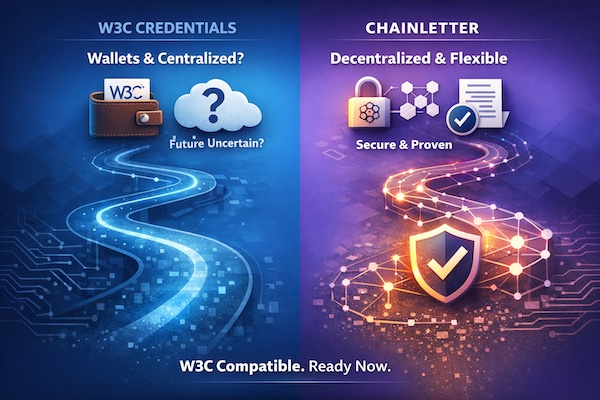
Formats like Open Badges and W3C Verifiable Credentials have generated significant interest, with the promise of interoperable credentials that work across platforms and systems. That vision is appealing, but the honest reality is that these ecosystems haven’t fully solidified. Adoption is fragmented, and tooling varies widely in quality.
Even broad implementation of these standards wouldn’t resolve one of the deeper structural problems in credentialing: centralization. When credentials depend on a central issuing authority or a platform-controlled registry, there’s an inherent vulnerability — if the platform changes, shuts down, or loses trust, the credentials it issued become harder to verify.
A decentralized, blockchain-based approach addresses that problem at the root, since no single party controls the verification record. Importantly, decentralization and open standards aren’t mutually exclusive — some platforms are building credential infrastructure that is both blockchain-anchored and aligned with open standards, which may ultimately offer the best of both worlds.
Skills-Based Hiring Is Accelerating
More employers are moving away from degree requirements toward demonstrated skills. Digital credentials issued by credible organizations are becoming a meaningful signal in that shift — which raises the stakes for credentialing organizations to issue verifiable, trustworthy credentials.
API-First Platforms Are Becoming the Norm
As credential programs mature and grow, organizations want to automate issuance, integrate with existing systems, and build custom credential experiences. Platforms that were built developer-first, with clean APIs, are better positioned to support that growth.
A Note on Platforms Worth Exploring
If you’re evaluating your options, Chainletter is worth a look. Built from the ground up as a blockchain-powered credentialing API and platform, Chainletter is designed for organizations that want both a polished issuing experience and the technical foundation to scale — whether that means issuing dozens of credentials or tens of thousands.
What makes it stand out is the combination of a clean, no-code issuing interface for non-technical users and a full-featured API for teams that want to automate and integrate. Credentials are blockchain-anchored, verifiable via public URL, and designed to be shareable. It’s a platform built for programs that take their credentials seriously.
Get Started
Ready to Launch Your Credential Program?
Digital credentialing doesn’t have to be complicated. The technology has matured to the point where any organization — regardless of size or technical sophistication — can run a professional, verifiable credential program. The biggest barrier isn’t technical. It’s just getting started.